



Sneezing, congestion, and a runny nose can leave you wondering what your body is reacting to. Many people struggle to tell the difference between allergy symptoms and cold symptoms because they often feel similar at first. The cause behind those symptoms, though, is very different, and that difference matters when it comes to treatment and recovery.
Allergies are triggered by your immune system reacting to substances like pollen or dust. A cold is caused by a viral infection. Knowing how to tell if you have allergies or a cold can help you avoid unnecessary treatments and get relief faster.
The Key Difference Between Allergies and a Cold
The main difference between allergies and a cold comes down to what is triggering your symptoms.
Allergies develop when your immune system reacts to harmless substances such as pollen, pet dander, or mold. This reaction leads to inflammation in the nasal passages and eyes. These are commonly referred to as allergic rhinitis symptoms.
A cold, on the other hand, is caused by a virus. It spreads through respiratory droplets or contact with contaminated surfaces. Once infected, your body mounts an immune response to fight off the virus.
In simple terms, seasonal allergies and colds can be separated by cause. Allergies come from environmental exposure. Colds come from infection.¹
Allergy Symptoms vs. Cold Symptoms
Looking at cold vs allergies symptoms side by side can make patterns easier to recognize. Here are the main differences in symptoms and duration:¹,²
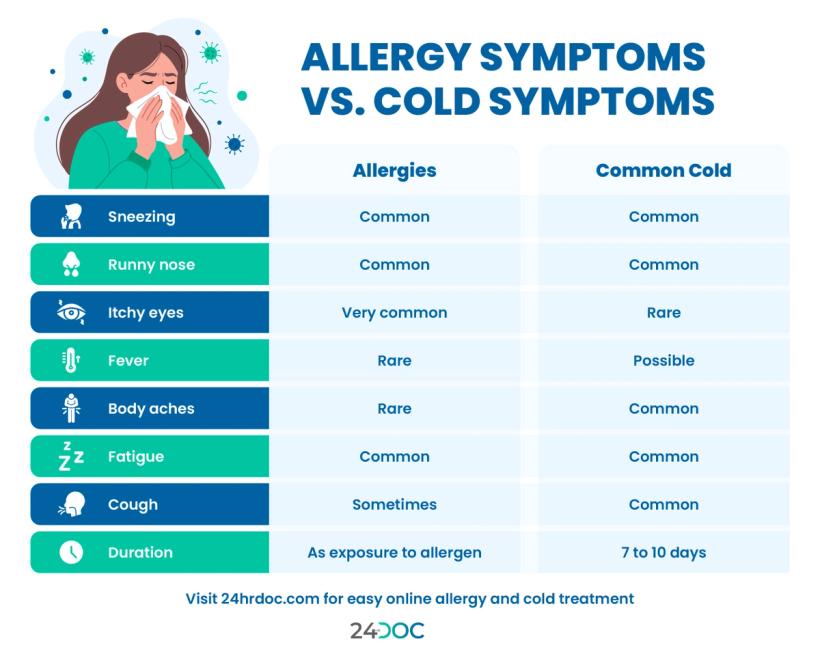
Symptoms More Likely to Be Allergies
Allergy symptoms tend to follow a consistent pattern, especially during certain times of the year or after exposure to triggers.
Common allergic rhinitis symptoms include:¹
- Itchy eyes
- Itchy nose or throat
- Frequent sneezing
- Nasal discharge
- Nasal congestion
- Postnasal drip
These symptoms often appear quickly after exposure to allergens and may persist as long as the exposure continues. If you notice symptoms worsening outdoors during spring or fall, seasonal allergies and colds become easier to distinguish.
Symptoms More Likely to Be a Cold
Cold symptoms tend to include more whole-body effects because your immune system is actively fighting a virus.
Signs more consistent with a cold include:¹
- Sore throat
- Fatigue
- Mild body aches
- Low-grade fever
- Thick nasal mucus
- Persistent cough
These symptoms usually develop gradually and improve within about a week.
How Long Symptoms Usually Last
Duration is one of the most helpful ways to tell the difference between allergies and a cold.
Allergy symptoms can last for weeks or even months. They may come and go depending on exposure to triggers like pollen or dust.
Cold symptoms usually peak within a few days and improve within 7 to 10 days. If symptoms linger beyond that, it may suggest allergies or another condition.
If you are asking how to tell if you have allergies or a cold, start by looking at how long your symptoms have been present.²
What Triggers Allergy Symptoms
Allergy symptoms are caused by environmental triggers that activate the immune system.
Common triggers include:²
- Pollen from trees, grasses, and weeds
- Dust mites
- Pet dander
- Mold spores
Exposure can lead to symptoms within minutes or hours. In contrast, a cold requires exposure to a virus, followed by an incubation period before symptoms appear.
This difference helps clarify seasonal allergies vs. cold symptoms, especially during peak allergy seasons.
When Cold and Allergy Symptoms Overlap
There is a significant overlap in allergy symptoms vs. cold symptoms, which is why confusion is common.
Both conditions can cause:¹
- Sneezing
- Nasal congestion
- Runny nose
Because of this overlap, many people assume they have a cold when they are actually experiencing allergies. Others may mistake a cold for allergies and delay appropriate care.
When Symptoms Might Be Something Else
Not every case of congestion or fatigue is due to allergies or a cold.
Other possibilities include:
- Sinus infections
- Influenza
- COVID-19
- Other respiratory infections
If symptoms are severe, worsening, or not improving, it may be time to consider a broader evaluation.

When to See a Doctor for Symptoms
There are certain situations where medical evaluation is recommended.
Consider seeking care if you have:¹
- Symptoms lasting longer than two weeks
- Severe sinus pressure or congestion
- Swollen lymph nodes
- High fever
- Worsening symptoms
- Difficulty breathing
Treatment Options for Allergies vs. Colds
Because the causes are different, treatments for cold vs. allergy symptoms are not the same.
Allergy treatments may include:²
- Antihistamines
- Nasal corticosteroids
- Avoiding known triggers
Cold treatments focus on symptom relief:²
- Rest
- Hydration
- Over-the-counter medications
Antibiotics are not effective for colds since they do not treat viral infections.
Frequently Asked Questions
Do allergies cause fever?
Allergies rarely cause fever. A fever is more commonly associated with infections like a cold or flu.¹
Why do allergy symptoms last longer than a cold?
Allergy symptoms continue as long as exposure to the trigger persists. Colds resolve once the immune system clears the virus.
Can allergies turn into a cold?
Allergies do not turn into a cold. They are separate conditions with different causes.
Online Allergy Care and Symptom Evaluation With 24hrdoc
If you are unsure about your symptoms, getting clarity does not have to be complicated. 24hrdoc offers quick and easy online cold treatment and allergy treatment from the comfort of your home.
A licensed provider can review your symptoms, help determine the likely cause, and recommend appropriate treatment or prescriptions when needed. Getting answers from home can make managing symptoms more convenient and less stressful.
Start your online visit with 24hrdoc today and get personalized guidance and treatment without leaving home.
Sources:
- Healthline. How to Tell If You Have Allergies or Something Else.
- Healthline. Is It Allergies or a Cold?.
Share this article