


Erectile dysfunction (ED) is often viewed as a sexual health issue, but it can also provide important clues about a man's overall health. Affecting up to 30 million men in the United States, ED is common, but persistent difficulty achieving or maintaining an erection should not be ignored.¹
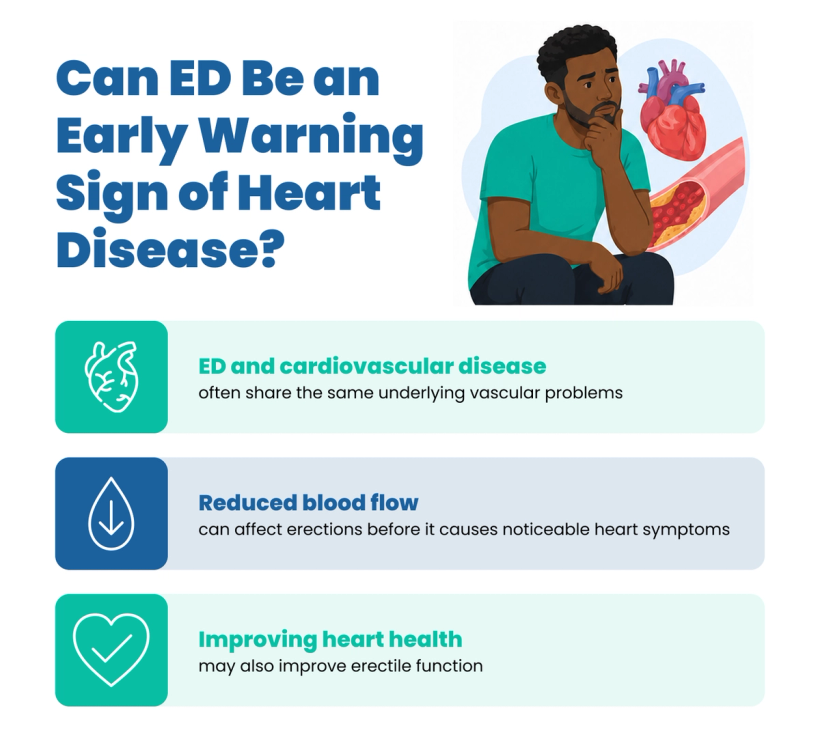
Healthy erections depend on healthy blood vessels and circulation. Because the arteries that supply blood to the penis are smaller than those that supply the heart, reduced blood flow may show up as ED before cardiovascular symptoms appear. Research suggests that some men experience ED years before being diagnosed with heart disease or having a cardiovascular event.
Not every case of ED is caused by heart disease. Erectile dysfunction can also result from hormonal changes, stress, medication side effects, or neurological conditions. Still, the link between ED and heart disease is strong enough that healthcare providers often view ED as a potential warning sign that warrants further evaluation.
Quick Answer: Can ED Be an Early Warning Sign of Heart Disease?
Yes. Erectile dysfunction can sometimes be an early warning sign of heart disease because both conditions are commonly linked to reduced blood flow and damage to blood vessels. In some men, erection problems appear two to five years before symptoms of cardiovascular disease become noticeable.²
Why Erections Depend on Healthy Blood Flow
The Role of Blood Vessels in Erectile Function
An erection occurs when sexual stimulation triggers the release of nitric oxide, a chemical that helps blood vessels relax and widen. This allows blood to flow into the erectile tissues of the penis.
As pressure builds inside the penis, the erection becomes firm enough for sexual activity. When blood vessels are healthy and functioning properly, this process happens naturally and efficiently.
What Happens When Blood Flow Is Reduced?
Problems arise when blood vessels become damaged or narrowed. Reduced circulation limits the amount of blood that can reach the penis, making it more difficult to achieve or maintain an erection.
This relationship between blood flow and erectile dysfunction is one of the primary reasons ED can serve as an indicator of broader cardiovascular health concerns.
Reduced blood flow may lead to:
- Difficulty getting an erection
- Difficulty maintaining an erection
- Less firm erections
- Reduced sexual performance
One of the earliest vascular problems associated with both ED and heart disease is endothelial dysfunction. The endothelium is the inner lining of blood vessels. When it becomes damaged, blood vessels lose some of their ability to relax and expand properly, reducing blood flow throughout the body.
The Connection Between ED and Heart Disease
Why ED Often Appears Before Heart Symptoms
The arteries that supply blood to the penis are significantly smaller than the coronary arteries that supply blood to the heart.
Because these vessels are smaller, even modest plaque buildup or reduced blood flow may affect erectile function long before cardiovascular symptoms become noticeable. This helps explain why ED often develops years before a heart attack, stroke, or diagnosis of coronary artery disease.
For many men, erectile dysfunction may act as a warning sign that vascular disease is already developing elsewhere in the body.
What Research Shows
Research continues to demonstrate a strong association between erectile dysfunction and heart disease.²,³
Studies have found that men with ED face a higher risk of:²,³
- Heart attack
- Stroke
- Coronary artery disease
- Cardiovascular-related death
Many cardiologists now consider ED an important cardiovascular risk marker, particularly when it develops without an obvious explanation.²
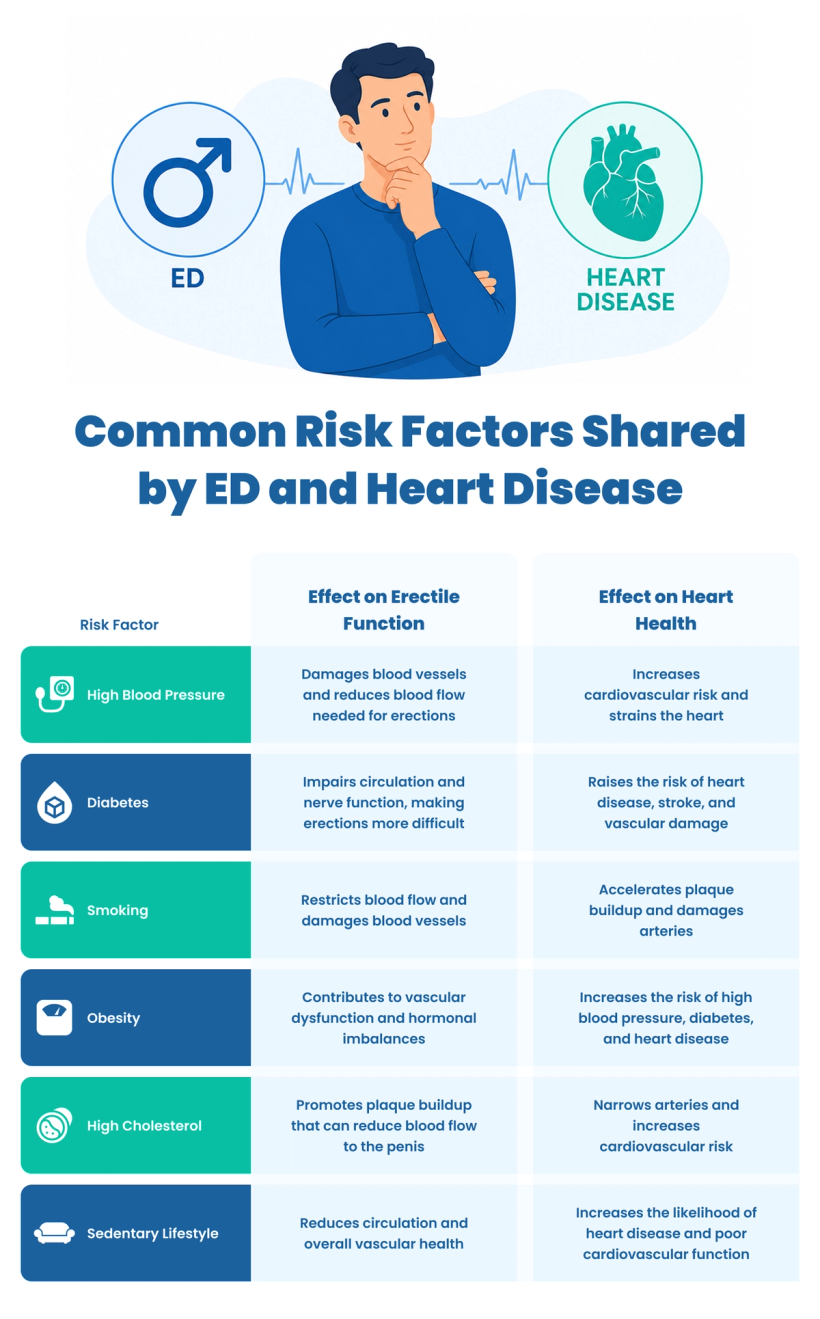
Because these risk factors frequently overlap, treating them can often benefit both sexual health and cardiovascular health.
When Should Men Be Concerned?
Warning Signs That Should Prompt Medical Evaluation
Not every episode of ED requires urgent attention, but certain situations deserve medical evaluation.
Consider speaking with a healthcare provider if you experience:
- New-onset erectile dysfunction
- Sudden erectile dysfunction
- Worsening symptoms over time
- ED without an obvious cause
- Erectile dysfunction before age 50
- A family history of cardiovascular disease
Other Heart Disease Symptoms in Men
Some men experience ED before any cardiovascular symptoms appear. Others may notice additional warning signs.
Common heart disease symptoms in men include:⁵
- Chest discomfort
- Shortness of breath
- Unusual fatigue
- Reduced exercise tolerance
- High blood pressure
- High cholesterol
- Irregular heartbeat
If these symptoms occur alongside erectile dysfunction, medical evaluation is especially important.

Can Treating Heart Health Improve Erectile Function?
In many cases, improving cardiovascular health can support better erectile function.
Because ED and cardiovascular disease often share the same underlying vascular issues, addressing those problems may improve blood flow throughout the body.
Lifestyle Changes That Benefit Both Conditions
Several lifestyle changes may improve both heart health and erectile function:
- Regular exercise
- Weight management
- Smoking cessation
- Blood pressure control
- Diabetes management
- Heart-healthy eating habits
- Limiting excessive alcohol use
- Improving sleep quality
These changes help support healthy blood vessels, better circulation, and improved overall health.
Why Early Intervention Matters
One of the benefits of recognizing ED as a possible warning sign is the opportunity for early intervention.
Identifying cardiovascular risk factors before serious symptoms develop may help reduce the risk of future complications. For some men, addressing high blood pressure, obesity, diabetes, or cholesterol issues may also lead to noticeable improvements in erectile function.
ED Treatment Options for Men Experiencing Erectile Dysfunction
While evaluating cardiovascular health is important, many men also want effective erectile dysfunction treatment to improve their quality of life.
Fortunately, several treatment options are available.
Oral ED Medications
Common prescription medications include:
- Sildenafil
- Tadalafil
- Vardenafil
These medications work by improving blood flow to the penis and helping blood vessels relax during sexual stimulation.
Many men experience excellent results with these therapies, although responses can vary from person to person.
When Combination ED Treatments May Help
Some men may benefit from alternative treatment strategies when a single medication does not produce consistent results.
Treatment plans should always be individualized based on medical history, underlying health conditions, symptom severity, and response to previous therapies.
Working with a licensed healthcare provider can help determine which approach is most appropriate.
Frequently Asked Questions
Does erectile dysfunction always mean heart disease?
No. ED can have many causes, including stress, low testosterone, medication side effects, and relationship concerns. However, cardiovascular disease is one of the most common physical causes of persistent erectile dysfunction.
How many years before heart disease can ED appear?
Research suggests ED may develop two to five years before a major cardiovascular event in some men.²
Can improving cardiovascular health improve erections?
In many cases, yes. Better blood pressure control, weight management, exercise, and improved circulation may positively affect erectile function.
Are ED medications safe for men with heart disease?
Many men with heart disease can safely use ED medications, but certain medications, particularly nitrates, can create dangerous interactions. Always discuss your medical history with a healthcare provider before starting treatment.
Take Action Before Symptoms Progress
Erectile dysfunction can affect confidence, relationships, and quality of life, but it may also provide important insight into your overall health. Because ED and cardiovascular disease often share the same underlying blood vessel issues, addressing symptoms early can help identify risk factors and support better long-term wellness.
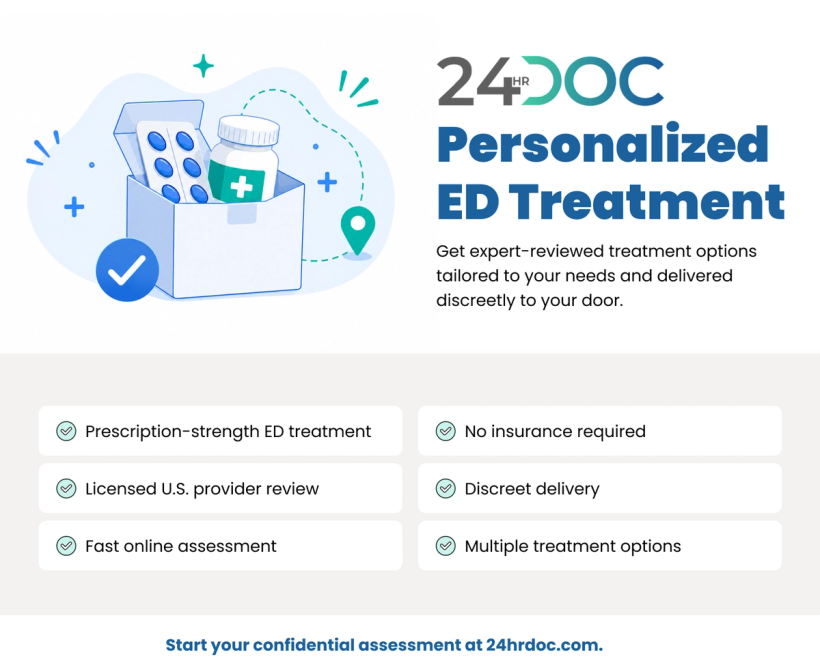
At 24hrdoc, licensed providers review each case individually and can recommend treatment options based on your health history, symptoms, and goals. For men who need more than a standard approach, treatment plans may include combination ED treatment options that bring together multiple active ingredients designed to support blood flow, performance, and consistency.
Start your confidential online ED treatment with 24hrdoc today and discover which treatment option may be right for you.
Sources:
- AHA | ASA Journals. Cardiovascular Implications of Erectile Dysfunction.
- Mayo Clinic. Erectile Dysfunction: A Vital Sign for Cardiovascular Health.
- American Heart Association. Erectile Dysfunction May Be Warning Sign for More Serious Health Problems.
- Johns Hopkins Medicine. Erectile Dysfunction Means Increased Risk for Heart Disease, Regardless of Other Risk Factors.
- Mayo Clinic. Heart Disease.
Share this article