


The terms STI and STD are often used interchangeably, which can make it harder to understand what is actually happening in your body. In everyday conversation, many people still use STD as a general label for sexually transmitted conditions, even when no symptoms are present. Medical professionals, however, draw a distinction that helps explain how infections develop and when they begin to cause health issues.
If you are trying to understand the difference between an STI and an STD, this guide breaks it down in clear, practical terms and explains what steps to take next.
Quick Answer: What’s the Difference Between an STI and an STD?
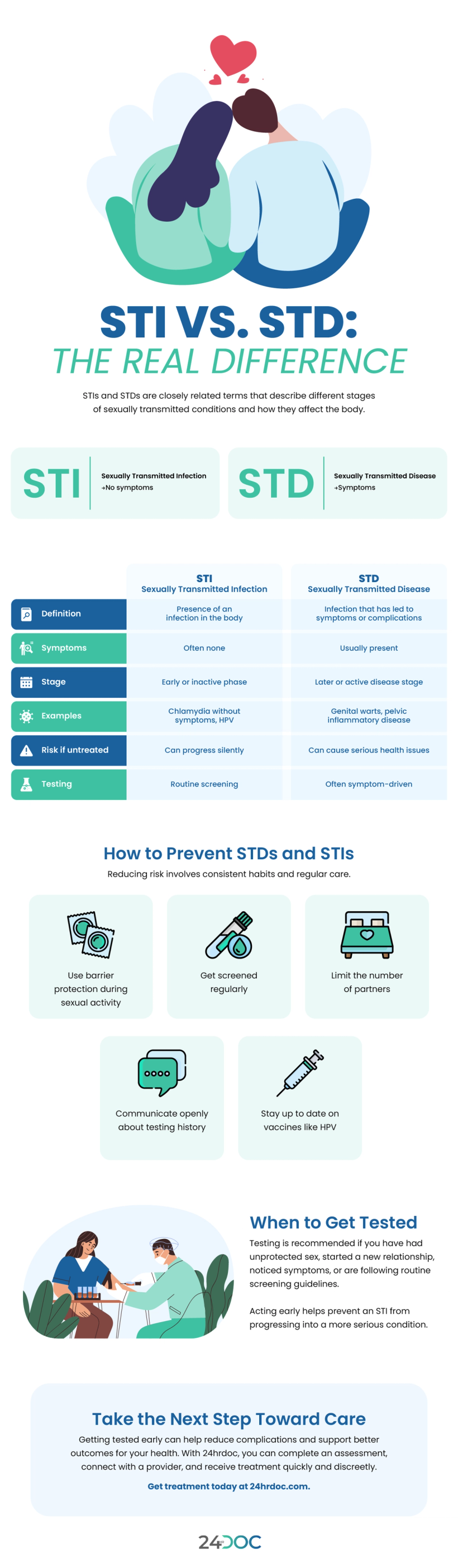
An STI (sexually transmitted infection) is an infection that may not cause symptoms, while an STD (sexually transmitted disease) is an infection that has progressed and is causing noticeable symptoms or complications.
STD or STI? Side-by-Side Breakdown
This breakdown organizes the difference between an STI and an STD by key categories, making it easier to compare each term.
STI (Sexually Transmitted Infection):
- Definition: Presence of an infection in the body
- Symptoms: Often none, especially in early stages
- Stage: Early or inactive phase of a condition
- Examples: Chlamydia without symptoms, certain types of HPV
- Risk if untreated: Can progress silently and lead to complications over time
- Testing: Typically part of routine screening, even without symptoms
STD (Sexually Transmitted Disease):
- Definition: Infection that has developed into symptoms or complications
- Symptoms: Usually present and more noticeable
- Stage: Later or active stage of a condition
- Examples: Genital warts, pelvic inflammatory disease
- Risk if untreated: Can cause serious and sometimes long-term health issues
- Testing: Often prompted by symptoms or known exposure
This structured STI or STD comparison helps clarify the difference between an STI and an STD and shows why early detection plays an important role in care.
Why the Term “STI” Is Used More Today
Healthcare providers increasingly use the term STI because it reflects a more accurate and preventative approach. Many infections do not cause immediate symptoms, yet they can still be transmitted and may lead to complications over time.
This shift also helps answer the common question of STD vs. STI terminology. Using STI highlights the importance of early detection and encourages testing before symptoms appear.
How an STI Becomes an STD
An STI can develop into an STD when the infection is left untreated and begins to affect the body more significantly.
This progression often follows a clear pattern:
- Initial exposure leads to infection
- The infection remains in the body, sometimes without symptoms
- Over time, it may begin to cause inflammation, damage, or noticeable symptoms
For example, untreated chlamydia can lead to pelvic inflammatory disease, while certain strains of HPV can lead to genital warts or increase cancer risk. This progression highlights the importance of early care in the STI vs. STD discussion.
STI Testing vs. STD Testing
The idea of STI testing vs. STD testing can be confusing, but the process is often similar. The main difference lies in why someone seeks testing.
STI testing is typically done as part of routine screening, even when no symptoms are present. STD testing is more often prompted by symptoms or known exposure.
In practice:
- Both involve lab tests such as urine samples, blood tests, or swabs
- Both aim to identify infections early or confirm a diagnosis
- Early testing improves treatment outcomes
STI and STD Prevention
Preventing infection starts with consistent, informed choices. While no method eliminates risk entirely, several strategies can significantly lower your chances of exposure.
Protective habits include:
- Using condoms or barrier protection during sexual activity
- Getting regular screenings, even without symptoms
- Limiting the number of sexual partners
- Communicating openly with partners about testing and history
- Staying up to date on vaccines, such as the HPV vaccine
Prevention works best when combined with regular testing. These steps support early detection and reduce the likelihood of an untreated STI progressing into an STD.

When to Get Tested for an STD or STI
Testing is recommended in several common situations. Knowing when to act can help you stay ahead of potential issues.
You should consider testing if you:
- Had unprotected sex
- Started a new relationship
- Notice any unusual symptoms
- Are following routine screening guidelines
Regular testing supports early detection and helps prevent progression from STI to STD.
What Happens After a Positive STI or STD Test
A positive result can feel overwhelming, but most sexually transmitted infections are manageable with proper care.
Next steps typically include:
- Confirmation of the diagnosis
- A treatment plan based on the specific infection
- Notifying recent partners so they can be tested
- Follow-up testing, if recommended
Treatment depends on the condition. Some infections are curable, while others can be effectively managed with ongoing care.
Get Tested and Treated Without the Hassle
Taking action early can help prevent complications and reduce stress around your health. Many infections are manageable when addressed quickly, and modern care options make it easier to get answers without unnecessary delays.
Discreet, online care allows you to complete a quick assessment, receive a provider review, and get treatment sent to your pharmacy when appropriate. This approach supports privacy, convenience, and faster access to care.
Get started with 24hrdoc today for easy, discreet online STI and STD testing and treatment.
Share this article