

GLP-1 microdosing is gaining attention as more people look for flexible ways to use GLP-1 medications that better fit their bodies, lifestyles, and long-term health goals. Instead of jumping quickly to higher doses, microdosing GLP-1 medications generally involves starting with smaller amounts or moving more gradually over time. For some, this includes approaches like low-dose semaglutide, used thoughtfully under medical guidance.
As interest in GLP-1 therapy continues to grow, many conversations focus less on the medications themselves and more on everyday realities such as GLP-1 cost, GLP-1 side effects, and GLP-1 accessibility. These practical factors play a big role in how people experience treatment. In response, some individuals explore microdosing as a way to improve tolerability, manage side effects, and create a more sustainable experience with GLP-1 therapy.
While experiences vary, the growing discussion around GLP-1 microdosing reflects a broader shift toward more personalized approaches to metabolic health—ones that prioritize comfort, consistency, and long-term support rather than one-size-fits-all solutions.
A Closer Look at the GLP-1 Microdosing Trend
The popularity of GLP-1 medications has increased rapidly due to broader awareness of their metabolic benefits. Media coverage, online discussions, and high-profile public conversations around weight loss treatments have introduced GLP-1 therapy to a much wider audience than in the past.
As demand increased, several challenges followed. Rising GLP-1 cost, limited insurance coverage, supply shortages, and side effects made it difficult for some patients to begin or maintain standard dosing schedules.
During this period, discussions around microdosing GLP-1 began circulating on social media and online forums. Many posts described using smaller doses, including semaglutide microdosing, as a way to manage side effects, extend medication supply, or navigate access barriers. These shared experiences helped push microdosing into the spotlight, even though it developed outside traditional clinical guidance.
Reported Benefits Driving GLP-1 Microdosing
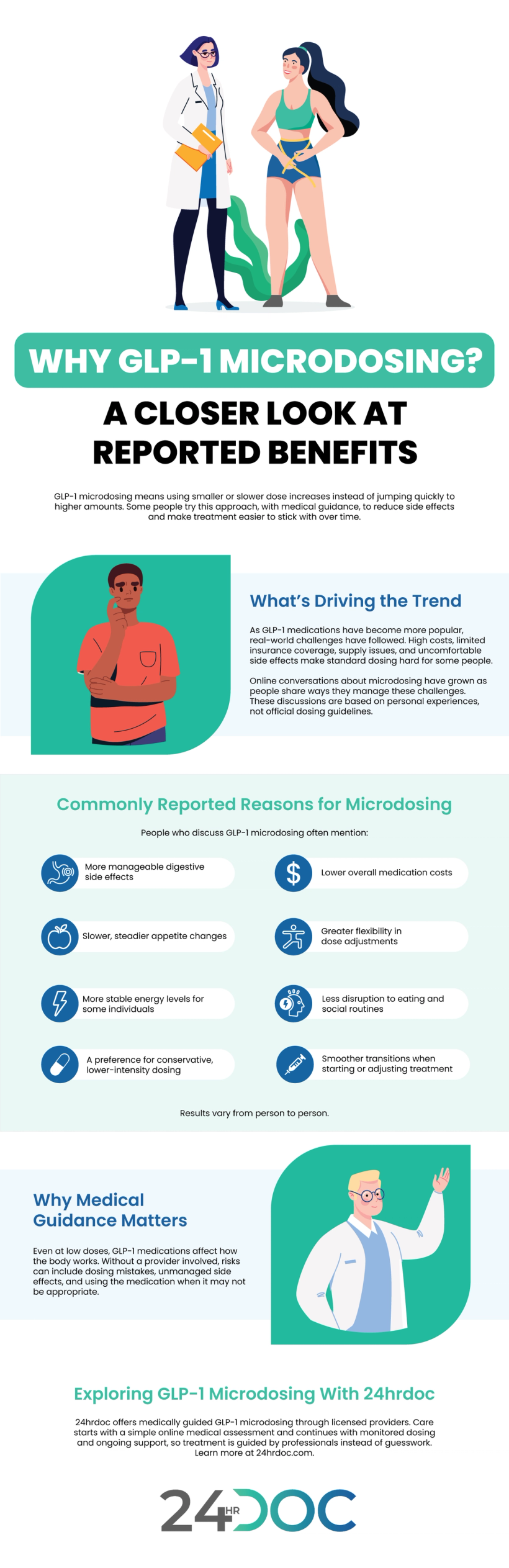
As interest in GLP-1 microdosing continues to grow, certain themes appear repeatedly in patient conversations, online communities, and telehealth discussions. These discussions often center on everyday experiences with GLP-1 medications, including how dosing choices affect comfort, cost, and consistency. The points below reflect reported experiences with microdosing GLP-1 medications rather than outcomes confirmed by clinical research.
1. Fewer or More Manageable Side Effects
Many people explore microdosing GLP-1 medications in hopes of reducing common GLP-1 side effects such as nausea, vomiting, diarrhea, and appetite suppression. Some report that lower doses, including approaches like low-dose semaglutide or semaglutide microdosing, feel easier to tolerate and less disruptive to daily routines, particularly early in treatment.
2. Lower Overall Treatment Cost
Cost remains a major concern for many patients. GLP-1 medications can be expensive, especially for those without consistent insurance coverage. Some individuals report using smaller doses to stretch prescriptions and lower monthly spending, making GLP-1 cost a key factor in why microdosing is discussed. At the same time, reduced dosing may also influence how well treatment works.
3. Slower Adjustment to Appetite and Digestive Changes
Some patients describe a preference for gradual changes rather than rapid shifts in hunger or digestion. Microdosing GLP-1 is often discussed as a way to ease into therapy more slowly, giving the body time to adapt to appetite and gastrointestinal changes. This slower pace is commonly mentioned by people who are sensitive to medication-related effects.
4. Greater Flexibility in Dosing Decisions
Another commonly cited reason is the desire for flexibility. Standard GLP-1 dosing schedules follow fixed timelines that may not feel suitable for everyone. People who discuss microdosing often describe feeling more involved in dose adjustments, especially when tolerance, lifestyle, or GLP-1 accessibility concerns come into play. These conversations frequently overlap with discussions of GLP-1 off-label dosing, underscoring the importance of clinician guidance.
5. More Stable Energy Levels
Some individuals report feeling less fatigue on lower doses compared to higher ones. Full-dose GLP-1 therapy can sometimes be associated with low energy during early use. People experimenting with microdosing often attribute steadier energy levels to reduced medication intensity, although experiences vary from person to person.
6. Less Disruption Around Eating and Social Situations
Another reported benefit involves daily life and social routines. Some people say lower doses feel less restrictive around meals, travel, or social events. Fewer food aversions or milder nausea are often mentioned as reasons microdosing GLP-1 feels easier to maintain in real-world settings.
7. Reduced Concern About Long-Term Medication Use
Microdosing is sometimes discussed as a way to use GLP-1 medications more conservatively. Some individuals view lower doses as a way to support short- or medium-term metabolic goals rather than committing to higher doses long term. These perspectives reflect personal comfort levels and preferences rather than established medical guidance.
8. Easier Transitions When Starting or Adjusting Treatment
People also report that very low starting doses or gradual dose changes feel smoother when beginning or modifying treatment. Some describe microdosing as helpful during transitions, such as restarting after a break or adjusting due to side effects. These experiences are anecdotal and not standardized.
Should You Try the GLP-1 Microdosing Trend?
GLP-1 microdosing may appeal to people who are interested in metabolic support but are cautious about traditional higher-dose protocols.
This can include individuals who are sensitive to medication side effects, have experienced difficulty tolerating standard GLP-1 dose escalation, or are looking for a lower-intensity approach under medical supervision. Others may be curious because of cost considerations, access limitations, or a preference for gradual changes rather than rapid shifts in appetite or digestion.
That said, interest alone is not enough to determine whether microdosing is appropriate. Factors such as BMI, medical history, current medications, and overall health goals all play a role in deciding if a lower-dose approach is safe and effective.
If you’re considering GLP-1 microdosing, the most important step is to talk with a licensed healthcare provider. A doctor can help you weigh potential benefits and risks, clarify expectations, and determine whether this approach aligns with your health needs rather than following a trend.
The Risks of Trying GLP-1 Microdosing Without Medical Guidance
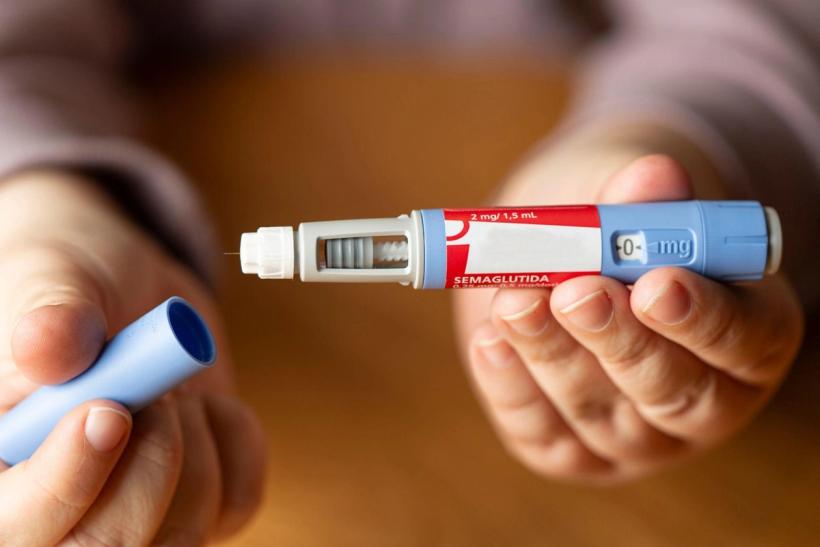
GLP-1 microdosing may be discussed as a lower-intensity option, but trying it without clinical oversight can increase risk. Even at reduced doses, GLP-1 medications affect multiple systems in the body and require professional evaluation.
- Dosing errors: Microdosing often involves very small dose adjustments, which can be difficult to measure accurately. Without guidance, dosing mistakes may result in inconsistent exposure or unintended side effects, particularly when compounded medications are used.
- Underlying medical risks: Certain health conditions, medications, or personal medical histories can make GLP-1 therapy unsafe. Without a provider review, these contraindications may not be identified before treatment begins.
- Side effects: Lower doses do not eliminate the possibility of nausea, fatigue, dehydration, or blood sugar changes. Without medical supervision, these symptoms may go unmanaged or be misinterpreted.
- Reduced benefits: Using doses that are too low may limit benefit, while stopping or adjusting treatment without follow-up can interfere with long-term metabolic or health goals.
For these reasons, GLP-1 microdosing should only be considered under the supervision of a licensed healthcare provider who can guide dosing decisions and monitor safety over time.
Frequently Asked Questions
Is GLP-1 microdosing considered off-label use?
GLP-1 microdosing generally involves doses lower than those outlined in standard prescribing guidelines, which makes it an off-label use. Off-label dosing should always be guided by a licensed healthcare provider.
Can you lose weight with GLP-1 microdosing?
Some people report weight changes with lower doses, but results vary. Microdosing may not produce the same level of weight loss seen with standard dosing, and outcomes depend on individual factors and medical oversight.
Why are people choosing GLP-1 microdosing instead of full doses?
Common reasons include concerns about side effects, cost, medication access, and a preference for gradual changes. These choices are often based on personal experience rather than clinical evidence, making provider guidance important.
Easy, Online, Medically Guided GLP-1 Microdosing Through 24hrdoc
Medically guided GLP-1 microdosing doesn’t have to be complicated. With 24hrdoc, this lower-dose approach is offered through licensed providers who focus on safety, oversight, and long-term metabolic support rather than aggressive dosing. For eligible adults, it’s a simple way to explore GLP-1 therapy with medical guidance built in from the start.
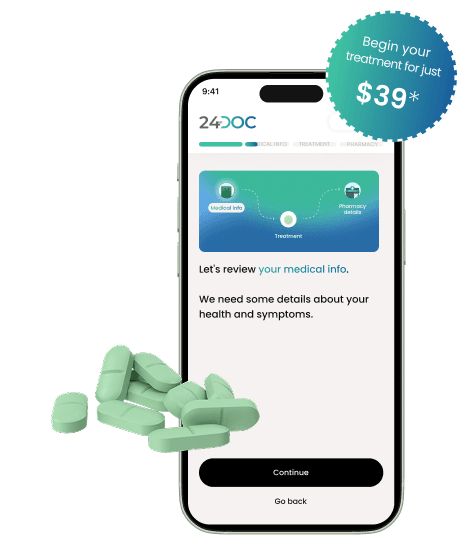
Everything happens online. You begin with a secure medical assessment, which a licensed provider reviews to see if microdosing is appropriate and to determine a personalized dosing plan. If treatment is prescribed, your care continues under medical supervision, with support to help manage tolerability and adjust dosing when needed. Services are available in all 50 states, with clear pricing, secure medical records, and no insurance required.
If you’re curious about GLP-1 microdosing but want to do it the right way, 24hrdoc makes medically supervised care easy to access—so your decisions are guided by professionals, not trends.
Share this article