


Gonorrhea is a common sexually transmitted infection that can be difficult to recognize, especially when symptoms are mild or inconsistent. Many people are left trying to make sense of changes in their body and decide what steps to take next. Misunderstandings about how the infection behaves can lead to delays in care. Globally, tens of millions of new cases are reported each year, with an estimated 82 million new infections among adults in 2020 alone.¹
Ahead, we’ll explain what happens in the body, why symptoms can be misleading, how long the infection can last, and what effective gonorrhea treatments involve.
Quick Answer: Does Gonorrhea Go Away on Its Own?
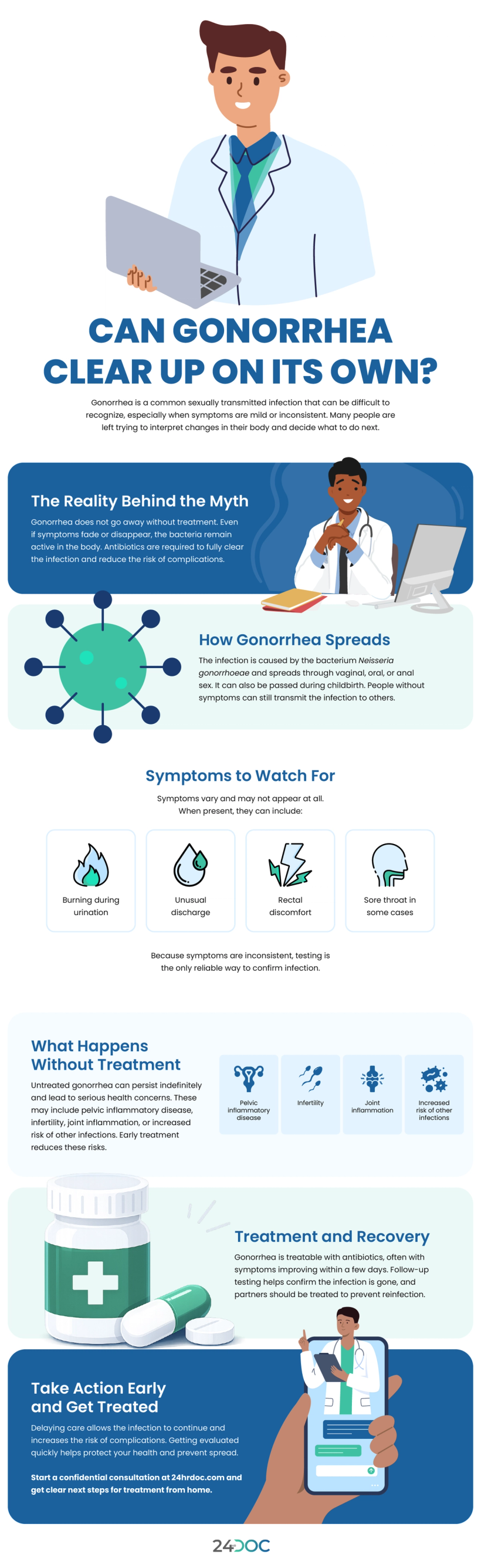
No, gonorrhea going away on its own is a myth. Even if symptoms improve or disappear, the infection remains in the body and continues to spread. Antibiotic treatment is required to fully clear the infection and prevent long-term health issues.²
Why This Question Comes Up So Often
Gonorrhea does not always cause noticeable symptoms, which makes it easy to overlook. Some people experience mild irritation that fades, while others have no gonorrhea symptoms at all. This creates confusion and leads many to believe the infection has cleared.
Delays in seeking care also play a role. Concerns about privacy or uncertainty about symptoms can cause people to wait, which allows the infection to persist.
What Happens If Gonorrhea Is Left Untreated?
Gonorrhea is caused by bacteria that remain active until treated. Without intervention, the infection can spread within the body and to other people.
Untreated gonorrhea increases the risk of complications and ongoing transmission. Even without symptoms, the bacteria can continue to cause internal damage.
Why Symptoms Can Disappear But the Infection Stays
Gonorrhea symptoms can come and go because the immune system may temporarily reduce inflammation. This can make it seem like the infection has improved.
The bacteria, however, are still present. Symptom relief does not mean the infection is gone, which is why testing and treatment are necessary.
Common Gonorrhea Symptoms to Watch For
Symptoms vary depending on the area affected, and many people do not notice any signs.
General gonorrhea symptoms may include:²
- Burning during urination
- Unusual discharge
- Rectal discomfort
Gonorrhea symptoms by area:²
- Genitals: irritation, discharge
- Rectum: itching, soreness, bleeding, discharge
- Throat: sore throat or no symptoms
Male-specific gonorrhea symptoms:²
- Milky, yellow, or green discharge
- Pain or swelling in one testicle
Female-specific gonorrhea symptoms:²
- Vaginal discharge
- Vaginal itching
- Spotting between periods

What Causes Gonorrhea and How Does It Spread?
Gonorrhea is caused by the bacterium Neisseria gonorrhoeae. It spreads through vaginal, oral, or anal sex with an infected partner.¹,²
Risk increases with new or multiple partners and with other sexually transmitted infections. Pregnant individuals can pass the infection during childbirth.
How Gonorrhea Is Diagnosed
Testing is the only way to confirm gonorrhea. Diagnosis typically involves:¹
- A urine test
- Swab testing of the genitals, throat, or rectum
Symptoms alone are not reliable for diagnosis.
Gonorrhea Treatments and What to Expect
The good news is that gonorrhea can be treated effectively with antibiotics. The current standard treatment is an injection of ceftriaxone.¹
After treatment:
- Symptoms usually improve within a few days
- Follow-up testing is recommended
- Sexual partners should also receive treatment
Avoid sexual activity until both you and your partner have completed treatment.
How Long Does Gonorrhea Last?
Without treatment, gonorrhea can persist indefinitely in the body. Symptoms may change or disappear, but the infection does not resolve without antibiotics.
With treatment, symptoms often improve quickly, but follow-up testing is still important to confirm the infection is gone.
What Can Happen If Gonorrhea Is Not Treated?
Untreated gonorrhea can lead to serious complications.
In women:¹,²
- Pelvic inflammatory disease
- Infertility
- Increased risk of ectopic pregnancy
In men:²
- Epididymitis, which can affect fertility
In all individuals:²
- Spread to the bloodstream
- Joint pain and inflammation
- Increased risk of HIV
During pregnancy:²
- Premature birth
- Infection passed to the baby, which can affect vision
Can You Still Spread Gonorrhea Without Symptoms?
Yes, gonorrhea can still be transmitted even without symptoms. Many people unknowingly spread the infection because they feel fine.
Testing and treatment are the only ways to stop transmission.
When to Get Tested and Seek Treatment
You should consider testing if:
- You notice symptoms such as discharge or pain
- A partner has tested positive
- You have a new or multiple partners
Early treatment reduces the risk of complications and protects your health.
Frequently Asked Questions
Can gonorrhea go away without antibiotics?
No, antibiotics are required to eliminate the infection.
If symptoms disappear, is gonorrhea gone?
No, the infection can still be present even if symptoms improve.
How long can gonorrhea last untreated?
It can remain in the body indefinitely and may lead to complications.
Can you get gonorrhea again after treatment?
Yes, reinfection can occur if you are exposed again.
Take the Next Step Toward Treatment
Gonorrhea does not clear on its own, and waiting can lead to complications or continued spread. Taking action early helps protect both your health and your partners.
Discreet online gonorrhea treatment makes it easier to move forward without delays. A quick assessment can be reviewed by a licensed provider, with clear next steps for treatment if appropriate.
Start your confidential online consultation with 24hrdoc today.
Sources:
- World Health Organization. Gonorrhoea (Neisseria gonorrhoeae infection).
- CDC. About Gonorrhea.
Share this article